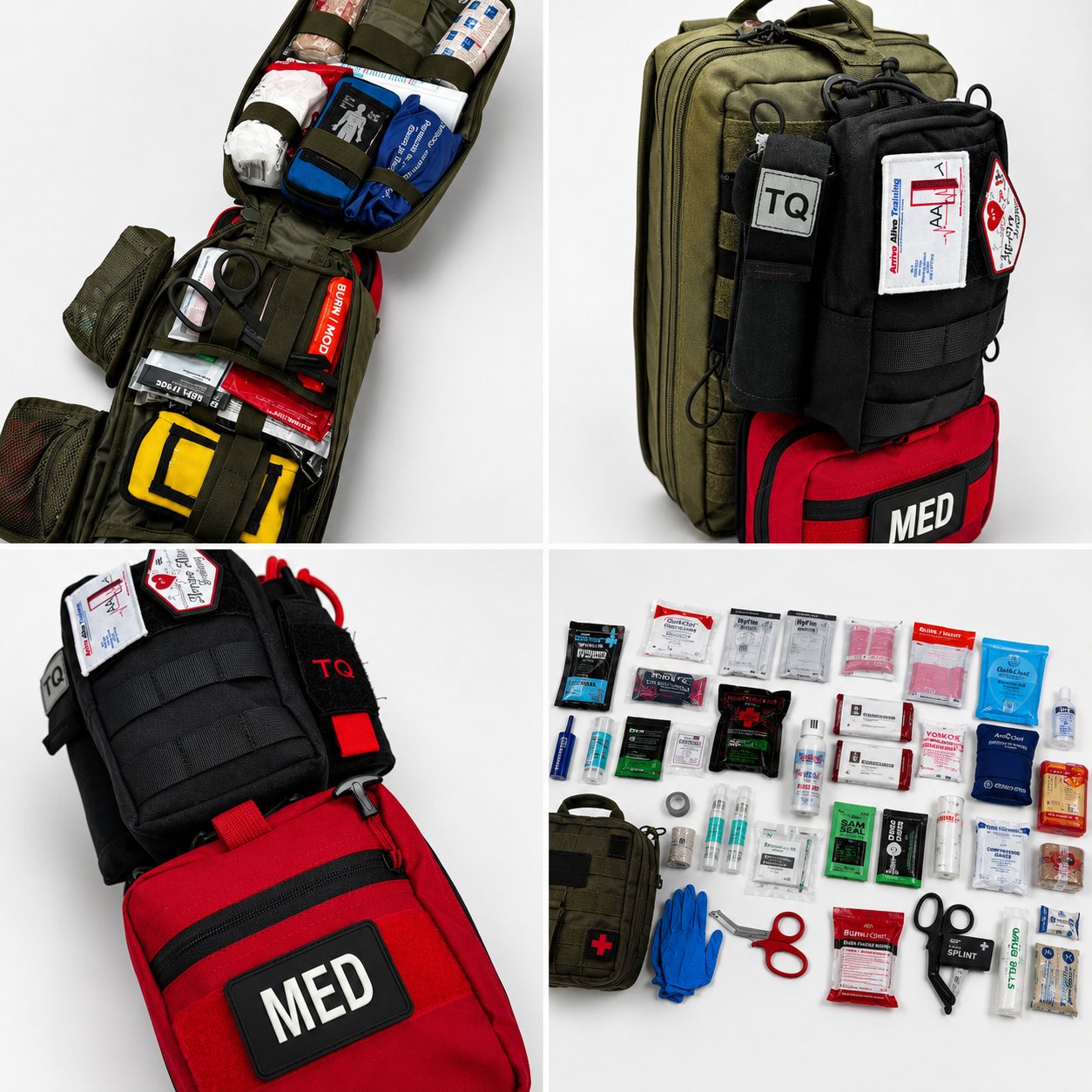
I've been a first responder for years, and time and again I've seen how the smallest oversight can become critical when lives are on the line. One of the hardest lessons I've learned? Environmental exposure—whether from a week-long beach vacation or unexpected severe weather—can degrade even the most rugged medical gear.
Vacation's Hidden Risks: Environmental Wear on Trauma Equipment
Relaxation under the blazing sun or rolling dunes of sand looks harmless, but trauma kits don't get a vacation:
• Heat Impact: High temperatures warp plastics, melt seals, and destabilize adhesives. In dressings, it might degrade the sterile seal, potentially compromising sterility. Meds or supplies stored in thermal-sensitive packaging may become brittle, sticky, or less effective.
• Sand and Dust Infiltration: Fine particulates can invade seams and closure areas, hindering sterility, blocking valves or zippers, and contaminating tools that need to stay clean.
• Cold or Moisture: In cold climates or humid conditions, condensation might form inside the gear. Moisture can corrode metal tools, weaken tape adhesion, and compromise packaging integrity.
Whether it's a rarely used CPR barrier, compressed dressings, chest seals, or occlusive trauma gear, these items are critical—but easily overlooked if they seem "like they'll do." The environment doesn't check your mindset: it degrades.
What to Look For: A Pre-Shift Gear Inspection
When you unpack your trauma kit after environmental exposure, don't just glance—inspect. Here's a checklist to guide you:
• Packaging Integrity: Cracks, warping, discoloration, compromised seals, or bulging. Prevents contamination and ensures sterility.
• Missing or Used Items: Count critical supplies—dressing types, chest seals, tourniquets, barrier devices, PPE—versus inventory list. Missing or already-used items put you at risk when seconds count.
• Adhesion & Flexibility: Dressings or tapes should still be pliable and sticky; tools should remain firm. Heat or cold can ruin flexibility or adhesion—nonadherent gear doesn't help.
• Label Clarity & Packaging: Ensure labels are readable and packaging opens correctly. In a high-stress call, hesitation due to unclear labels wastes time.
• Tool Functionality: Test any tools or devices that allow for rudimentary checks (e.g., scissors, retractable tools, tourniquets). Even simple failure can derail care at a critical moment.
Check against a standard inventory list and document what you find. Trust me: your future self—and your patients—will thank you.
A Real Story
I recently went away to relax and reset. Vacation was great—warm sand between my toes, gentle breezes, freedom. When I returned, I grabbed my trauma kit expecting everything to be ready. But heat had warped the seals on several dressing packs. A tourniquet's Velcro had sand stuck to it during inspection, and I realized there was enough grit inside an occlusive chest seal pack to compromise sterility. These are obviously my just in case items, not used every day—but when I did need them? They could have failed.
Preparedness comes from attention to detail, from recognizing that "used gear or compromised packaging" isn't "good enough," it's dangerous.
Your Kit, Your Lifeline
Your gear isn't just a bag—it's a lifeline, the bridge between chaos and care. Whether you've sent items through the blast of sun, sand, or freezing winds, your inspection matters. It's not overkill—it's duty.
Takeaway Checklist:
• Visually inspect all packaging—look for warping, damage, or compromised seals.
• Inventory count—ensure nothing is missing, used, or expired.
• Function test—verify tools and dressings remain flexible, adhesive, and operational.
• Label clarity—make sure you can quickly read and identify what you need when time is critical.
• Document findings—whether you're logging your pre-shift checks or taking a list of what needs to be replaced…this helps maintain trust in your kit and your readiness.
As first responders, we know our moments matter. So does our gear—especially when it's been through the elements. Treat your trauma kit with respect: check, inspect, and trust in what you carry. Because when everything aligns, you're ready—and that can make all the difference.
*Pro Tip: Just because something isn't usable in a patient care aspect, doesn't mean it can't be used for training!*